How to use the bi-directional translation method
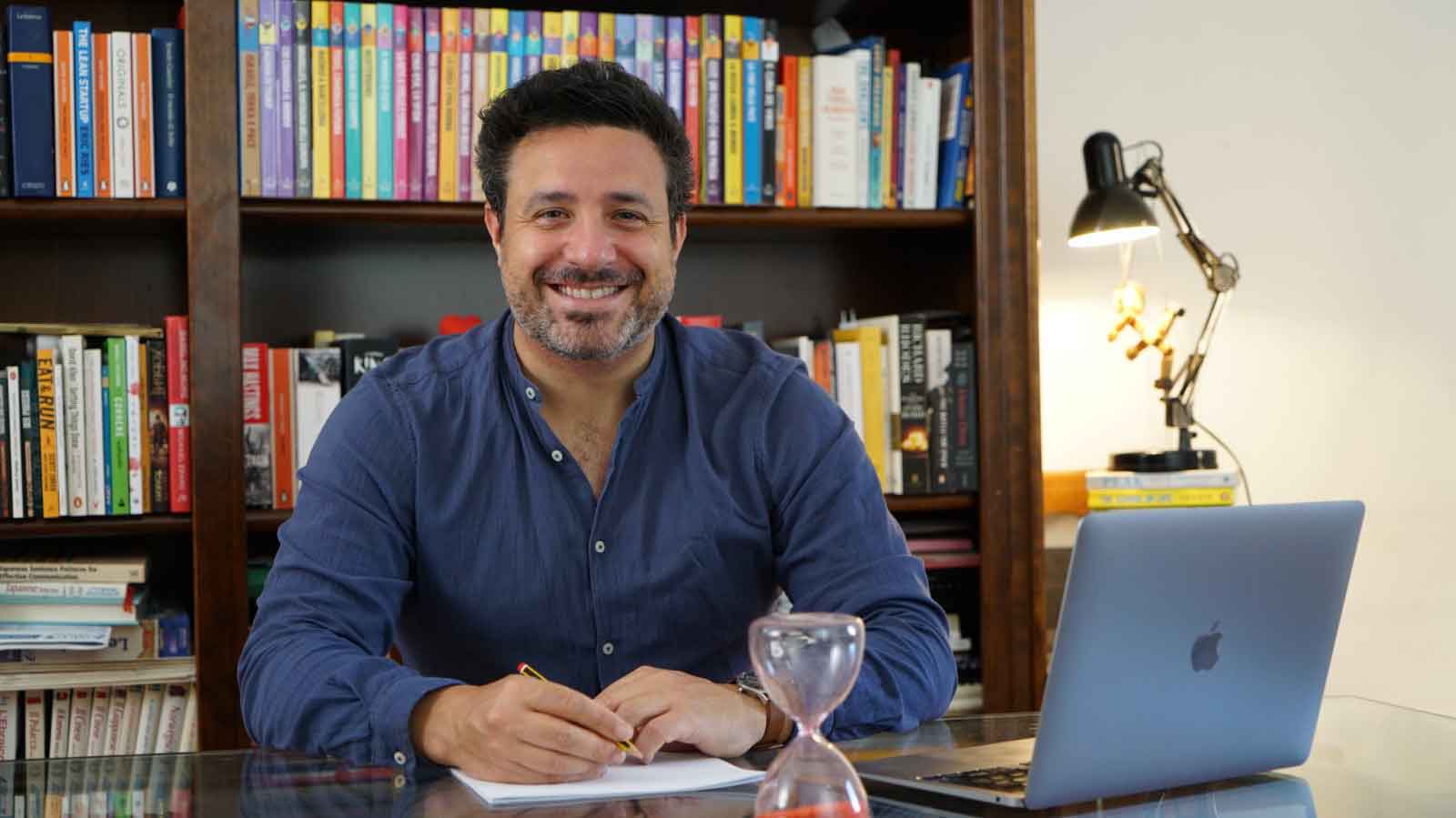
This post is a breakdown of the bi-directional translation method, or BDT, advocated by Luca Lampariello, a well-known polyglot from Italy.
This is the first in what will become a series of method breakdowns, where I break down a unique or popular language learning method and show you how to make it your own.
How it’s done
BDT, as explained by Luca, comprises five core habits plus a six-step process.
The five principles
Before learning the steps, there are five core habits you need to know. Anyone familiar with my free guide to learning languages should find these very intuitive.
- Learn every day — Focus on short, daily lessons instead of infrequent, longer ones.
- Learn all four skills together — Develop your reading, writing, speaking, and listening skills together, not separately.
- Interleave — Rotate between tasks. The sub-skills grow faster when you switch often.
- Space your reviews — Come back to material on a schedule so it sticks long-term.
- Treat language as a skill, not a subject — It’s something you do, like an instrument, not a set of facts you memorise for an exam.
The cycle
BDT runs as a six-step cycle, spread out over 6 or more days, applied to short bilingual texts. The classic example is an Assimil dialogue: a passage in your target language with a translation in your own language sitting alongside it.
Step 1: Listen and read. Play the audio while you read the target-language text. Compare it against the translation, lean on the grammar notes, and don’t move on until you understand all of it. The goal is total comprehension.
Step 2: Map the sound. Go back through the text and mark it up with arrows for the rising and falling pitch. Tie the words on the page to the melody of the language.
Step 3: Review, but vary it. Go over the same text in different ways so your brain doesn’t go numb: read while listening, then listen with your eyes closed, then read it aloud.
Step 4: Translate into your own language. Put the target-language text into your native tongue, in your own words. Don’t translate word-for-word. Try to capture the meaning as you would naturally say it.
Step 5: Walk away. Wait a day or two before the final step. You want to forget a little, because recalling something you’ve half-lost builds a far stronger memory than reviewing something still fresh.
Step 6: Translate it back. Take your own translation from Step 4 and turn it back into the target language, from memory. Then check your version against the original dialogue. Wherever the two differ, you’ve found a gap in your vocabulary or grammar. The mistakes do the teaching.
Revisit your reverse translations on a stretched-out schedule, something like days one, three, eight, twenty, and fifty. Each return should be a little harder to recall.
Under the hood
The method runs on meaning rather than words. Every time you translate, in either direction, you’re chasing the feeling of the sentence, not a one-to-one swap of vocabulary.
This method is applying a few things that make it work. First: the first five steps cause you to undertake repeat reading, building strong familiarity with the text that will help you absorb the language.
Next, the translation steps force you to reinterpret the text. That way, when you come to translate it back into your target language, you are practising output with words and forms that are very similar to those you just spend a bunch of time absorbing. This will help you transform your knowledge from passive into active.
Under the hood BDT works by letting you forget on purpose, then making you repeat the material from memory. Most study methods keep the material in front of you, which feels productive and teaches you very little. This one takes it away on purpose.
Make it your own
First, its strengths:
BDT is at its best for beginners, where you’re building the foundation from scratch. The use of repeat reading will help you absorb new forms well.
Once you reach an intermediate level, you can drop read-while-listening and move to just listening, ten to fifteen minutes a day, of material you’ve already studied, so you can focus purely on the sound.
As for its weaknesses:
By the advanced stage you’ve largely outgrown the loop. The work becomes consuming native content and picking what Luca calls linguistic role models, real speakers whose style you want to absorb. At this stage, this kind of activity will fall off in its usefulness.
This technique also suffers somewhat in that the process of translating into your native language can be considered quite inefficient. Spending all that time writing in a language you probably don’t need to practise can be quite time-consuming, but it will not help you improve.
So how can you make it your own?
As Luca stated in his reply to my question on the method during the Reddit AMA, you don’t have to adhere to this method strictly.
In my view, the time during step 4 (translating into your own language) could be better spent engaging with your target language in a different way. Rather than translation into your native language (which you already know), you could instead simply spend some time summarising or re-interpreting the text in your target language.
If some other aspects don’t quite suit your learning style, there are other adjustments you can make:
- You can drop any steps that focus on skills you are already strong at. For example, if your pronunciation is already solid, you can replace mapping the sounds with another activity.
- You can incorporate tutors into the process by having them review your output.
- You could change the timing based on your own schedule and preferences.
There’s really no limit to how many variations you could make. The key, as with any language learning activity, is that you force yourself to use those skills you are weakest at. Each step should lead to some insight or skill improvement.
In my view, any beginner learner can be served well by engaging deeply with a text to understand its meaning. Similarly, trying your hand at outputting the language in a controlled environment is a great way to build familiarity and spot errors.
For that reason bi-directional translation method will be a useful tool on any learner’s belt.
This is just a brief overview, if you’d like more detail, Luca has a course you can follow.
One Final thing
Learning a language takes sustained practice over a long period of time. If you’d like a little help staying motivated, consider my newsletter. Every second week I drop a little bit of motivation directly in your inbox through tips, resources, and anything else of interest. Don’t worry, I never spam, never share emails, and there’s an easy unsubscribe button if you decide it’s not for you. It’s completely free; no catch, no premium, just the best of what I can find on the internet. More info here.